
Blogs
2026 Email Compliance Guide for Small Businesses
Email Compliance, Opt-In Forms, Unsubscribe Laws, Small Business Risk
2026 Email Opt-In & Unsubscribe Rules: FAQ Guide for Small Businesses
Staying compliant with new opt-in form regulations and unsubscribe rules is no longer optional. For small businesses, it is a critical defense against low-level, predatory lawsuits and costly deliverability issues. This FAQ-style guide from AEO walks you through what you need to know in 2026.
FAQ 1: What are the new rules around email opt-in forms in 2026?
In the United States, marketing emails are still governed by the CAN-SPAM Act, which is an opt-out law, not opt-in. That means you are not legally required to collect explicit consent before sending commercial emails, as long as you:
Use accurate “From,” “To,” and reply-to information and non-deceptive subject lines.
Clearly identify the message as an advertisement when appropriate.
Include a valid physical postal address and an easy, functional unsubscribe link.
However, email platforms like Mailchimp and Constant Contact increasingly require permission-based lists in their terms of service (legalclarity.org). So while U.S. law does not force you to use an opt-in form, best practice and platform rules effectively do. For AEO clients, that means designing clear, compliant opt-in forms is both a legal and deliverability win.
FAQ 2: How do opt-in requirements differ for EU and UK customers?
If you collect subscribers in the EU or UK, you move into a strict opt-in world under GDPR and the ePrivacy/PECR rules. Consent must be: freely given, specific, informed, and unambiguous. That usually means:
A clear, unchecked checkbox for marketing emails on your form.
Plain-language copy explaining what subscribers will receive and how often.
A record of consent (time, date, IP or source) stored in your system.
Many European regulators also encourage double opt-in for higher proof standards, especially in Germany. For small businesses using AEO’s email optimization, we recommend double opt-in wherever you have international traffic to reduce disputes and “I never signed up” complaints that fuel predatory claims.
FAQ 3: What about new rules on tracking pixels and advanced email analytics?
In 2026, Italy’s Data Protection Authority introduced rules that treat email tracking pixels like cookies. By October 28, 2026, you must obtain opt-in consent before using pixels that identify individual recipients (iubenda.com). That means:
Adding a separate, unchecked consent box for tracking in forms targeting Italian users.
Updating your privacy notice to explain what data is tracked and why.
Even if you do not operate in Italy, this trend signals where global email privacy is heading. AEO recommends transparent tracking disclosures and consent language now, so you are ahead of future regulations and less exposed to complaints.
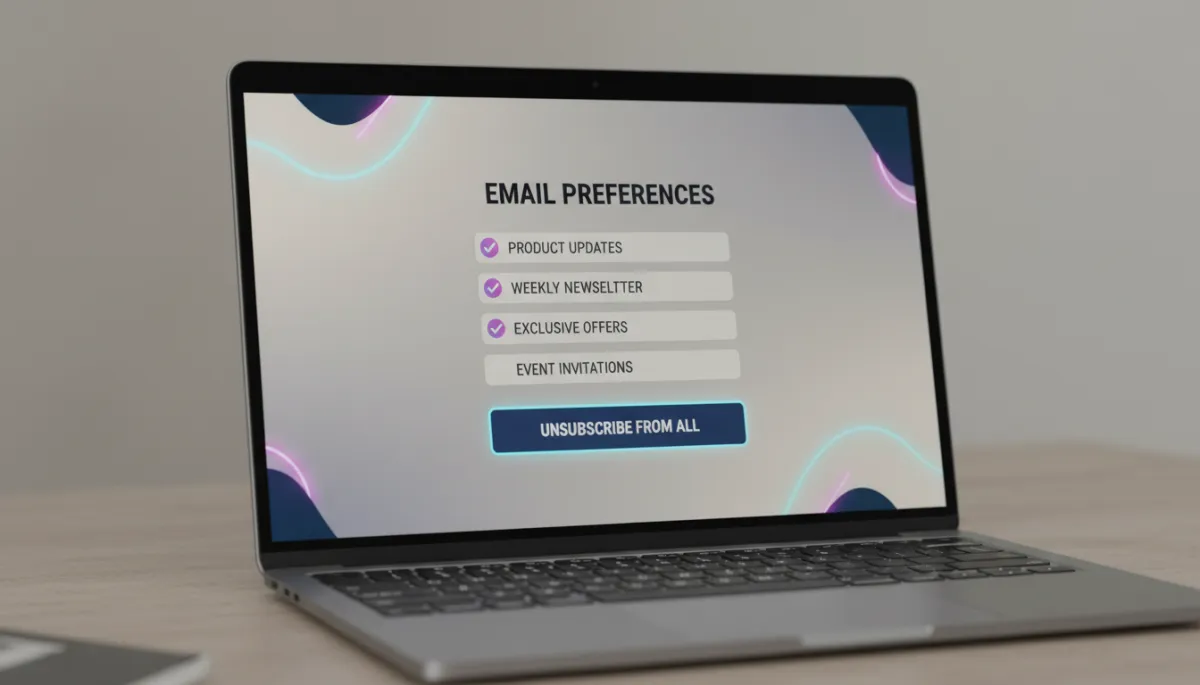
Transparent preference centers reduce spam complaints and legal exposure for small brands.
FAQ 4: What are the current unsubscribe requirements and trends?
Across jurisdictions, one message is clear: unsubscribing must be easy. Under CAN-SPAM, every commercial email needs a clear opt-out method that works for at least 30 days, and you must honor requests within 10 business days (legalclarity.org). GDPR, CASL, and state privacy laws echo this “simple and effective” standard.
On top of legal rules, major inbox providers like Gmail and Yahoo now require one-click unsubscribe (RFC 8058) for high-volume senders (mailflowauthority.com). If your unsubscribe flow is clunky, forces a login, or buries the link in tiny text, you are inviting spam complaints and deliverability issues—red flags that opportunistic attorneys can exploit when building a case that your practices are “deceptive” or “unfair.”
FAQ 5: How are predatory lawsuits targeting small businesses around email?
Low-level, predatory lawsuits against small businesses are not new. We have seen waves focused on ADA website accessibility, vague patent claims, and wage-and-hour disputes (Forbes; SmallBusinessReport; Inc.). The same strategy is now appearing around email marketing and data privacy:
Demand letters claiming your list is not properly opt-in, even when you believed it was.
Threats based on missing or hard-to-find unsubscribe links.
Claims tied to tracking pixels or “dark patterns” in your forms and preference centers.
These cases often rely on small technical missteps and the fear of legal costs to push quick settlements. For a growing brand, even one such lawsuit can drain resources and damage your reputation.
FAQ 6: What practical steps can my small business take to stay safe?
To reduce the risk of predatory email-related lawsuits while improving deliverability and customer trust, AEO recommends:
Use clear, keyword-rich opt-in forms. Explain “email newsletter,” “promotional offers,” and “marketing emails” in plain language, with unchecked boxes and links to your privacy policy.
Implement double opt-in for new lists, especially if you serve EU/UK audiences or use advanced tracking.
Offer one-click unsubscribe in every marketing email and process removals within 48 hours, even though CAN-SPAM allows 10 business days.
Maintain clean records. Keep logs of when and how subscribers opted in, plus any consent for tracking pixels or SMS.
Review your templates regularly. Make sure your footer, unsubscribe copy, and physical address are always present and readable.
📌 Key Takeaway: The more transparent your opt-in and unsubscribe experience, the harder it is for anyone to argue that your email marketing is misleading or abusive.
FAQ 7: How does this help my email performance, not just compliance?
Strong opt-in practices and frictionless unsubscribe links are not just legal shields; they are powerful email optimization tools. Permission-based lists typically see higher engagement, fewer spam complaints, and better inbox placement. In a world where Gmail and Yahoo monitor complaint rates closely and Apple’s Mail Privacy Protection distorts open data, clean, engaged lists are your competitive advantage.
When you design your forms and emails with compliance, clarity, and user control in mind, you protect your small business from low-level predatory lawsuits—and you build a more profitable, sustainable email channel for the long term.

FREE Podcast Guide
Ready to dive into the world of podcasting, but not sure how to turn it into a profitable venture?
Download our comprehensive guide "5 Ways to Make Money Podcasting" today. This guide is jam-packed with insights and strategies, guiding you through every stage from naming your show to hitting the publish button on your episodes, all while unlocking lucrative opportunities.
Don't just podcast, profit from it!

Want more
visibility?
credibility?
profitability?
WE CAN HELP.